Top of page
LIT Bible

The Liberation & Inclusion Translation.

Bring the groundbreaking tranlsation of the New Testament with you, wherever you go. Faithful to the original Greek and to the victims of today's church.

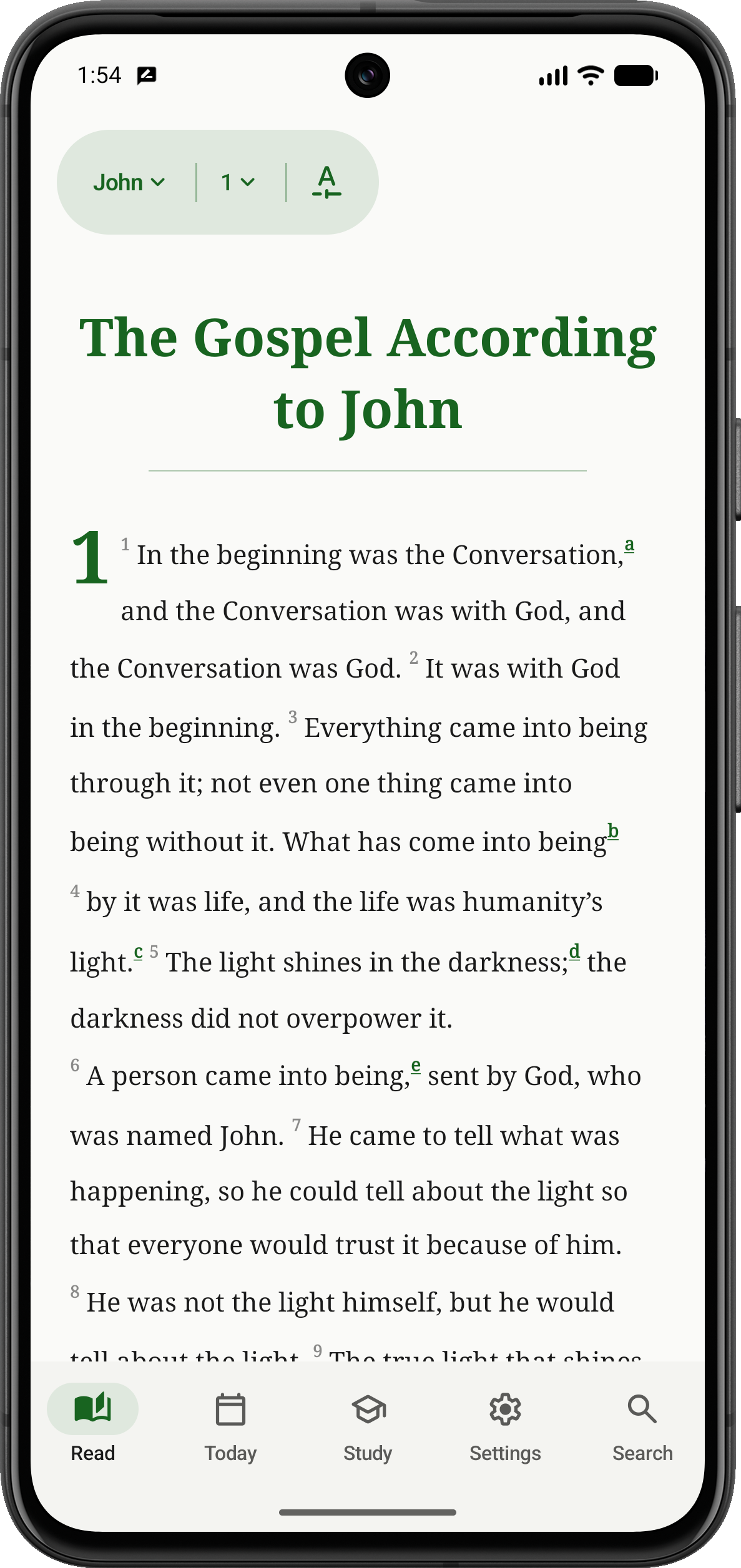
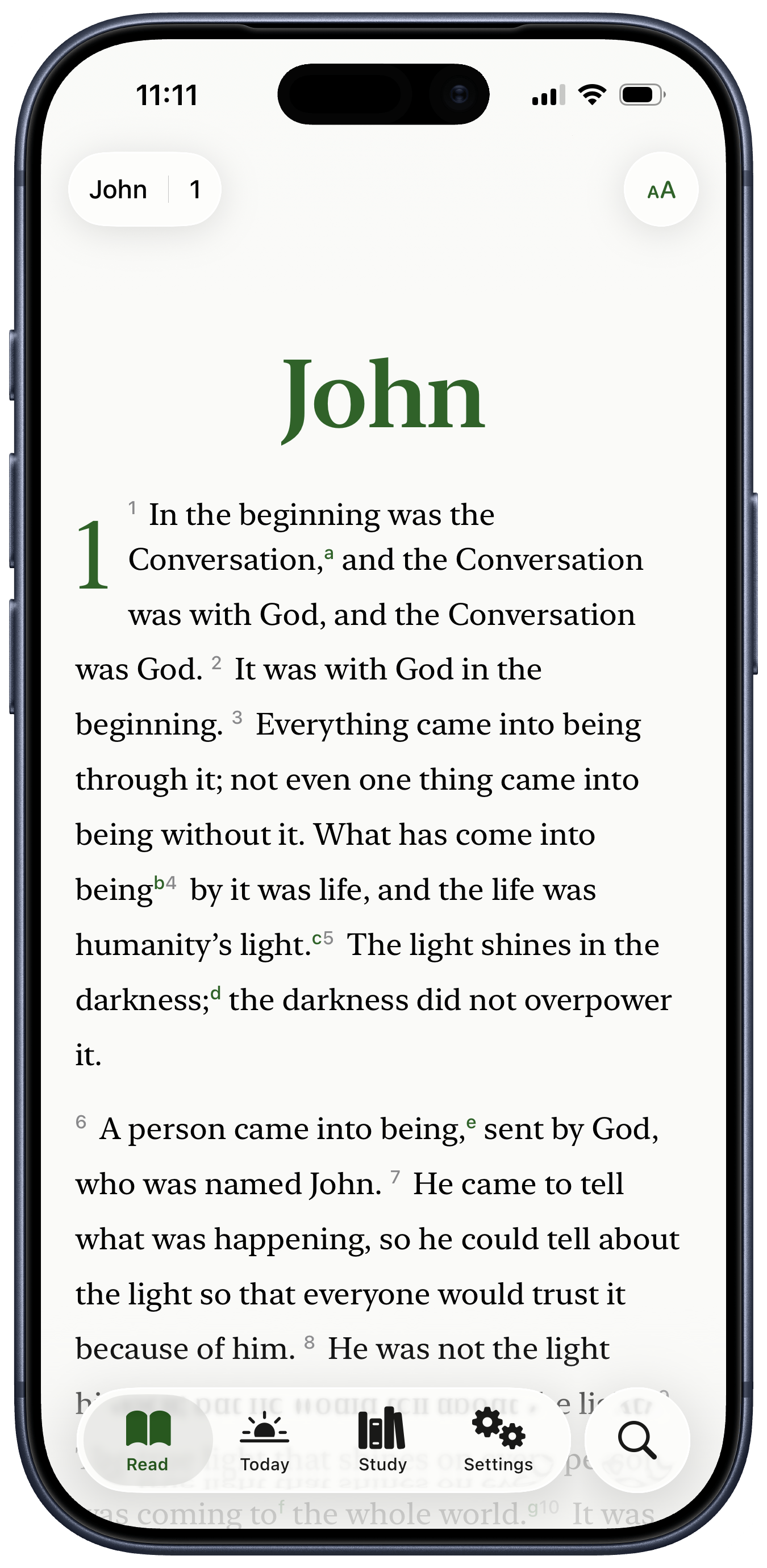
LIT Bible app showing John 1 — 'In the beginning was the Conversation' — with the app's Ordinary Time green accent
A first taste

What does it actually read like?

John 1:1–5

LIT

In the beginning was the Conversation, and the Conversation was with God, and the Conversation was God. It was with God in the beginning. Everything came into being through it; not even one thing came into being without it.

What has come into being by it was life, and the life was humanity's light. The light shines in the darkness; the darkness did not overpower it.

NRSV

In the beginning was the Word, and the Word was with God, and the Word was God. He was in the beginning with God. All things came into being through him, and without him not one thing came into being.

What has come into being in him was life, and the life was the light of all people. The light shines in the darkness, and the darkness did not overcome it.

Traditional versions render logos as 'Word'; LIT translates it as 'Conversation' — stressing relational communication over static decree.
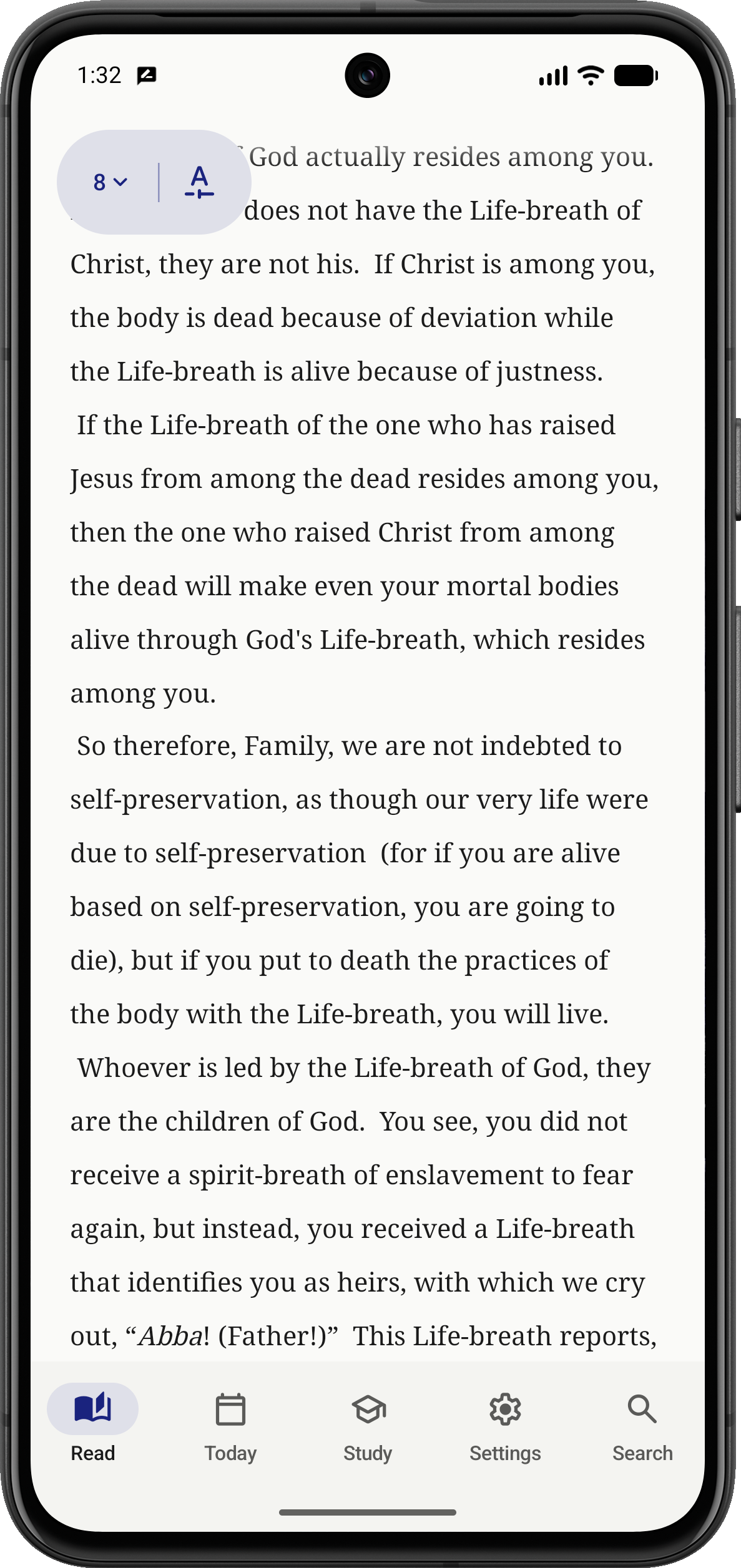
The reader.

The translation is the heart of it. The app is the way you read it.

Read the Bible as literature...

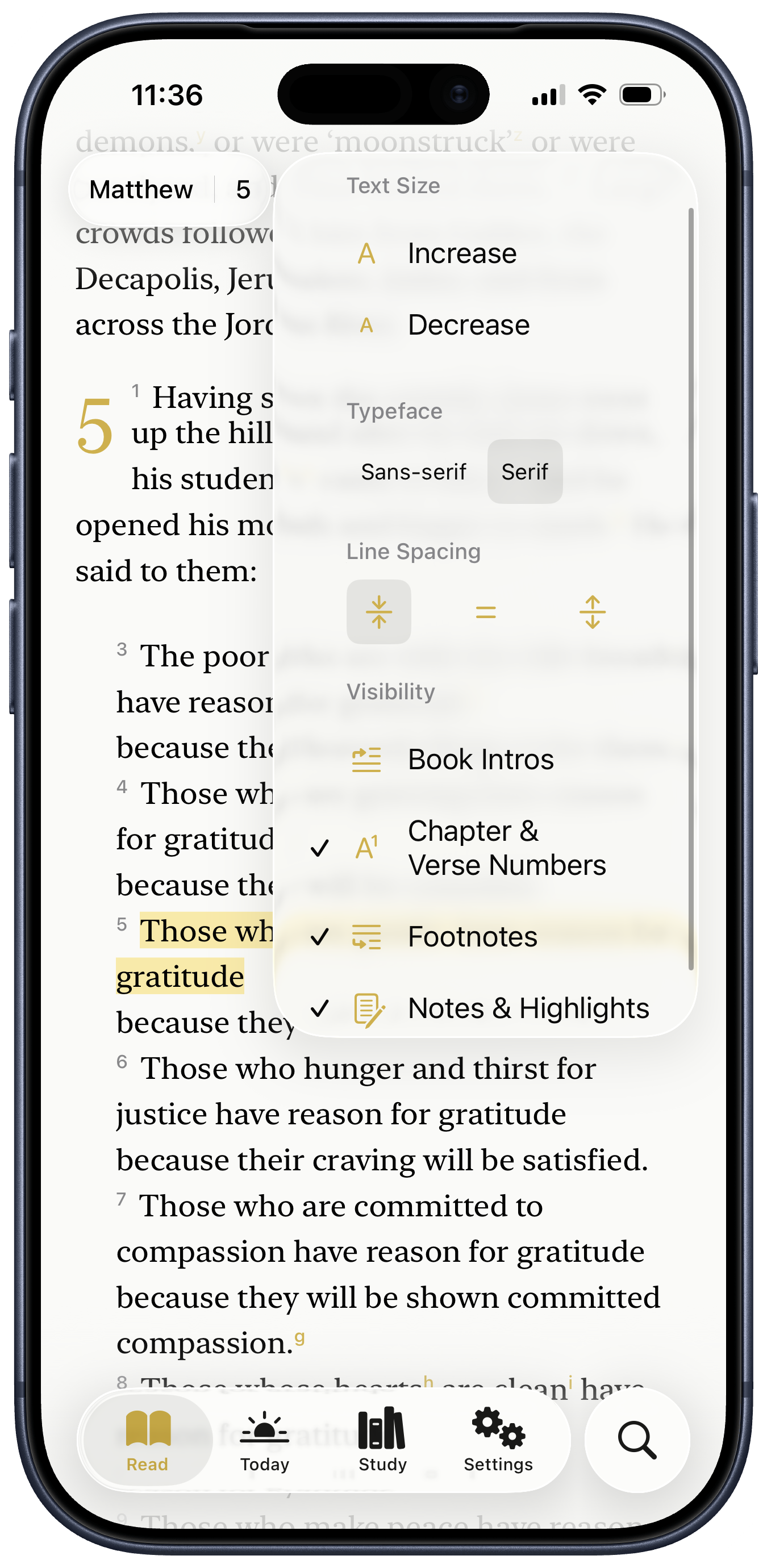
Enjoy each gospel, epistle, and antifascist apocalyptic tract as literature: hide chapter drop-caps, verse markers, and footnotes. Scroll through the entire book without a Next button between artificial chapters.

...Or nerd out. Hard.

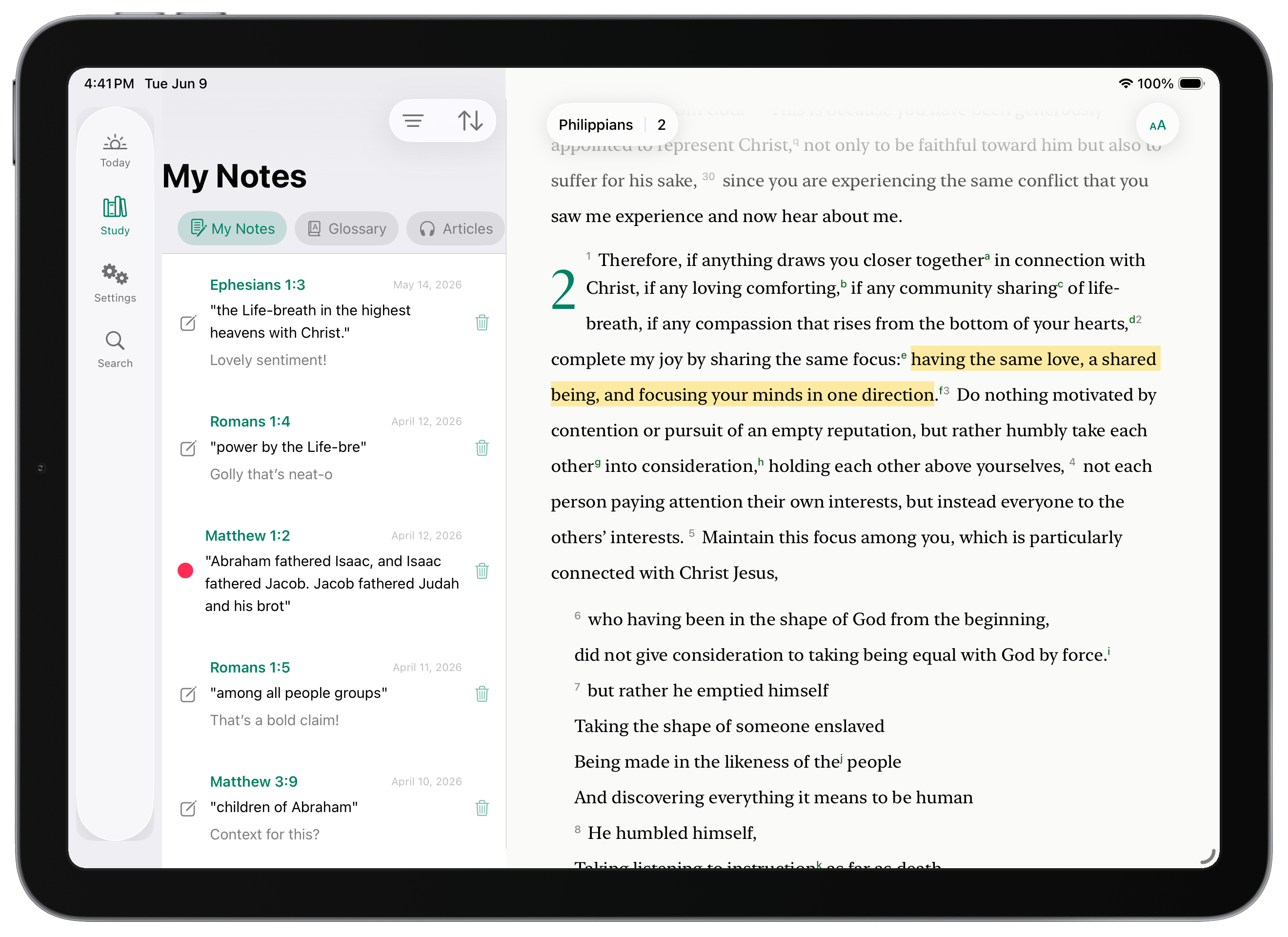
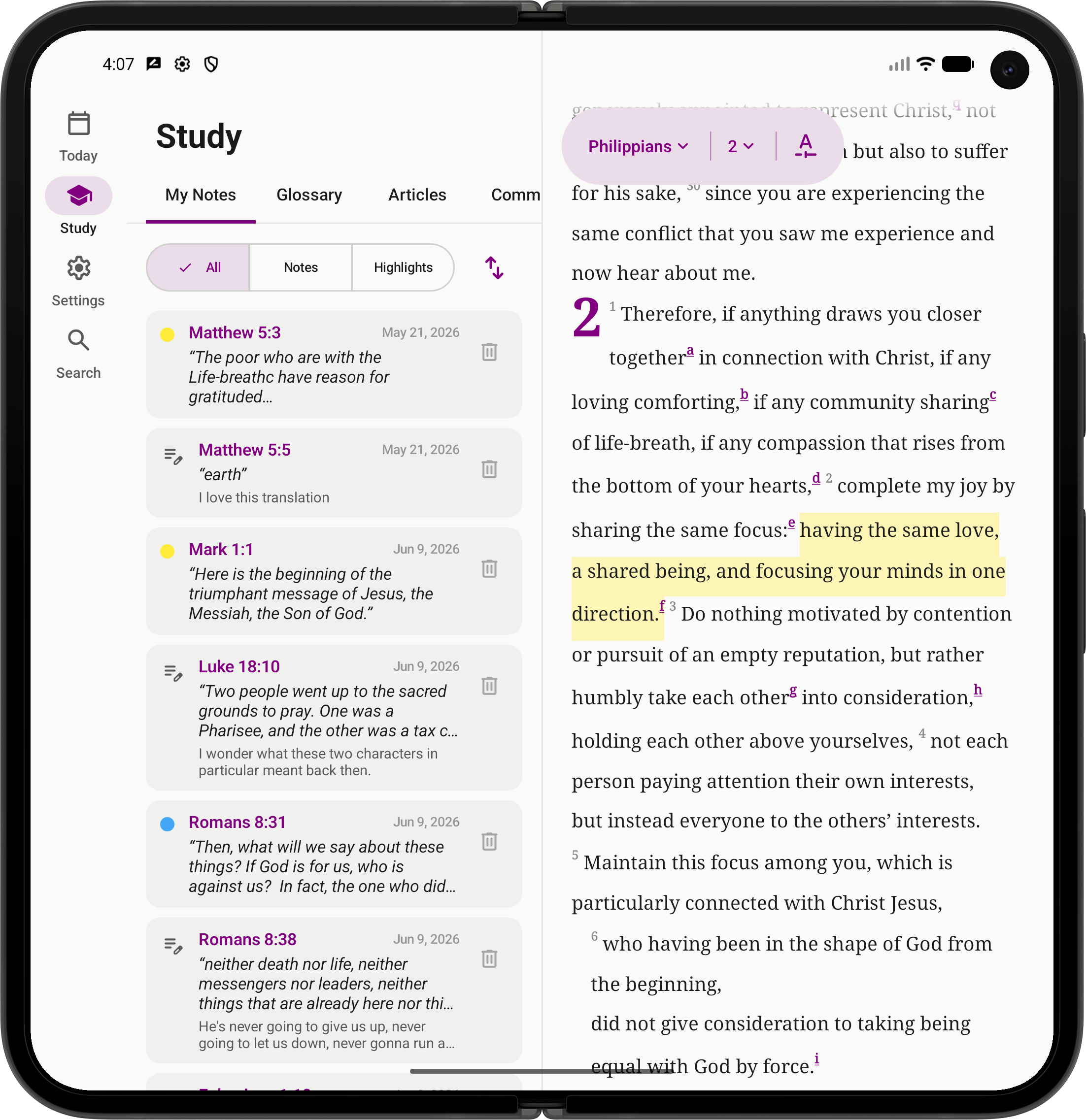
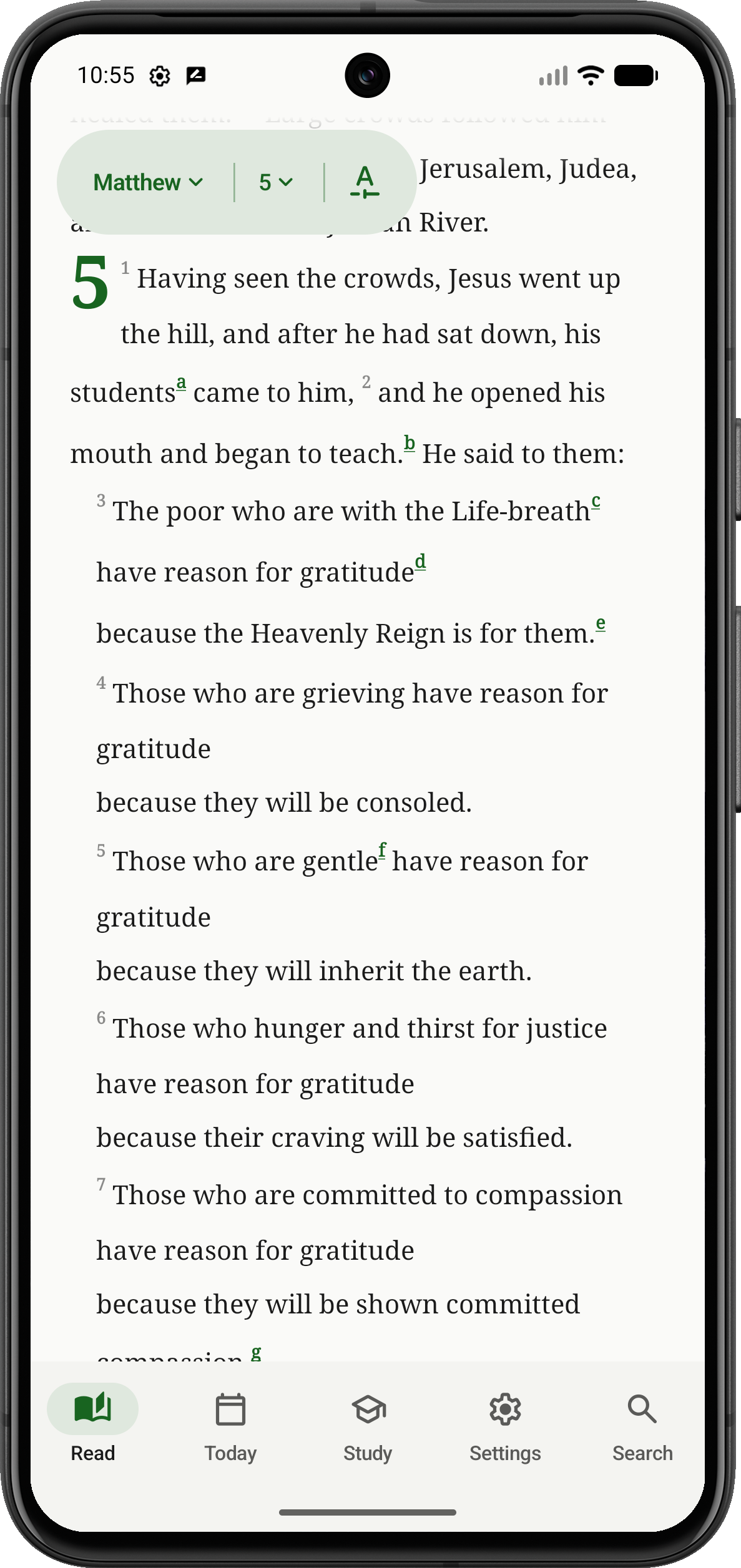
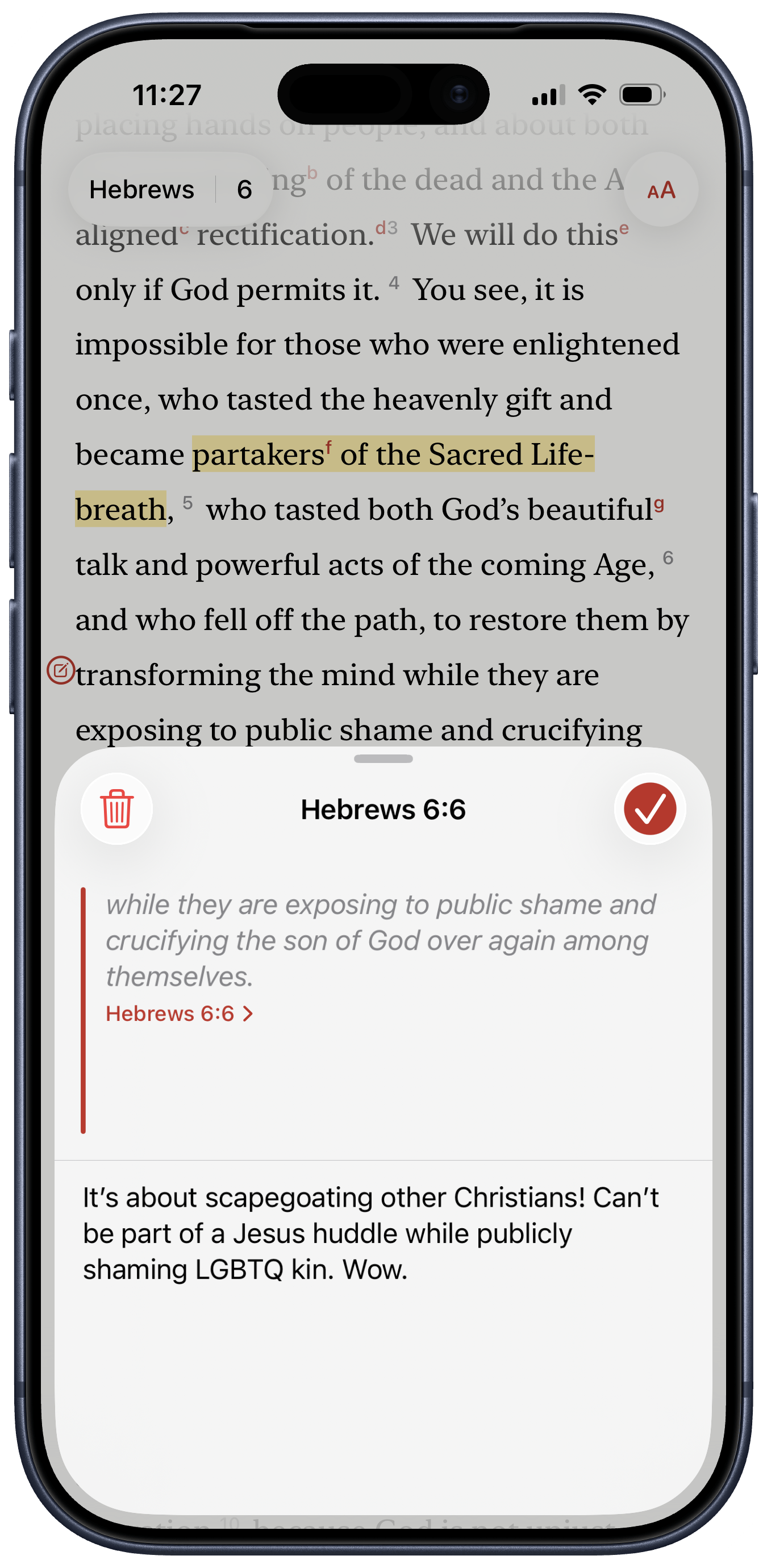
Or unleash your special interest zeal with thousands of exceptionally nerdy footnotes, historical context detours, and trauma-informed analysis. Then, add your own with four highlighter colors and an intuitive inline note tool.

iOS dark mode: ...Or nerd out. Hard.

Read with the church all year.

Prepare for next Sunday’s readings from the Revised Common Lectionary are just a tap away. Or follow one of our growing libraries of year-long focused reading plans.

iOS light mode: Read with the church all year.

Pop the hood of the translation itself.

Dive into the LIT BIble’s translation choices and challenges in a glossary of contested vocabulary, articles from the translator himself, and the commitments behind the work. And have we mentioned the 2,700 footnotes?!

iOS light mode: Pop the hood of the translation itself.

Tracks the church year.

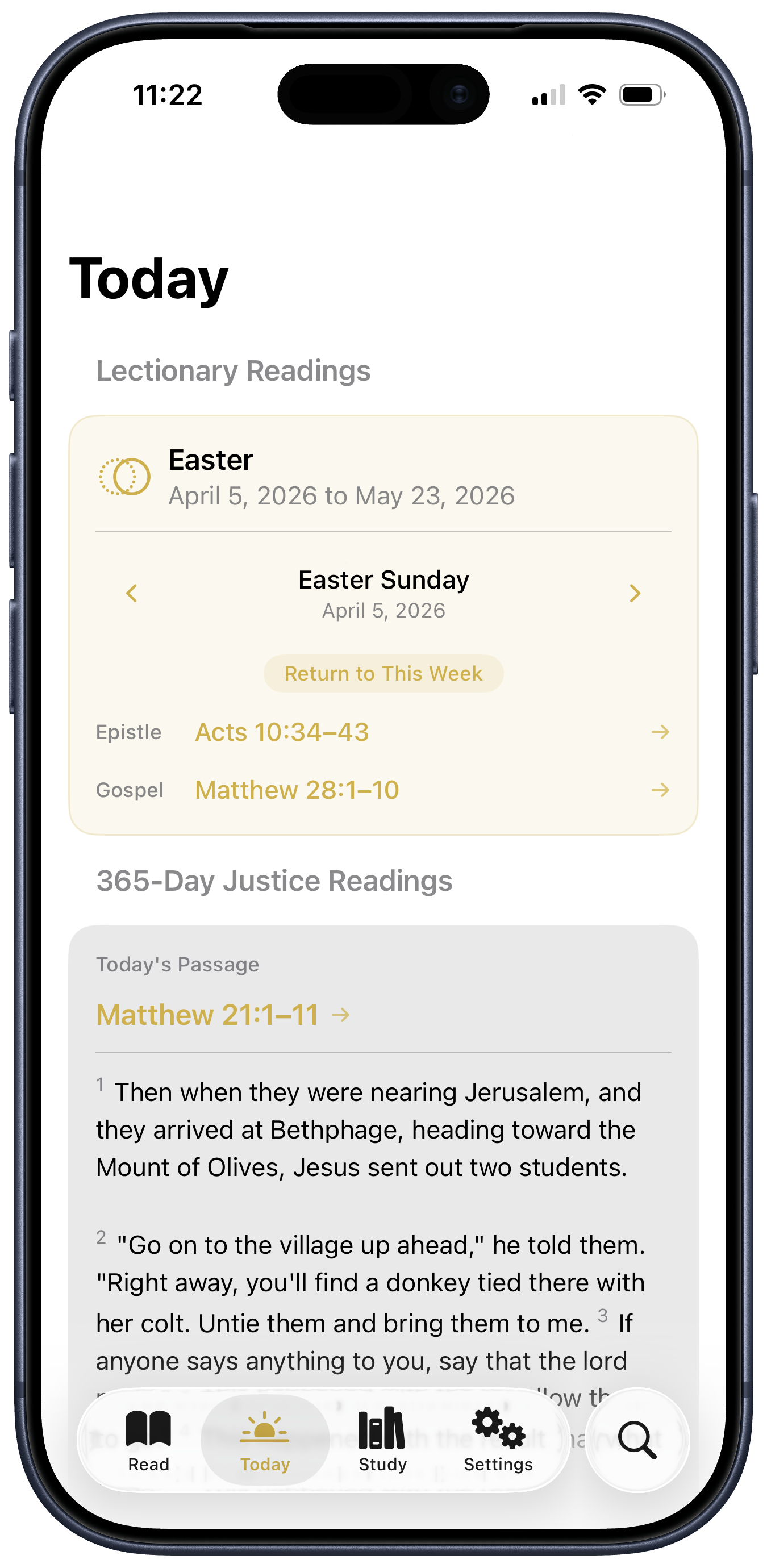
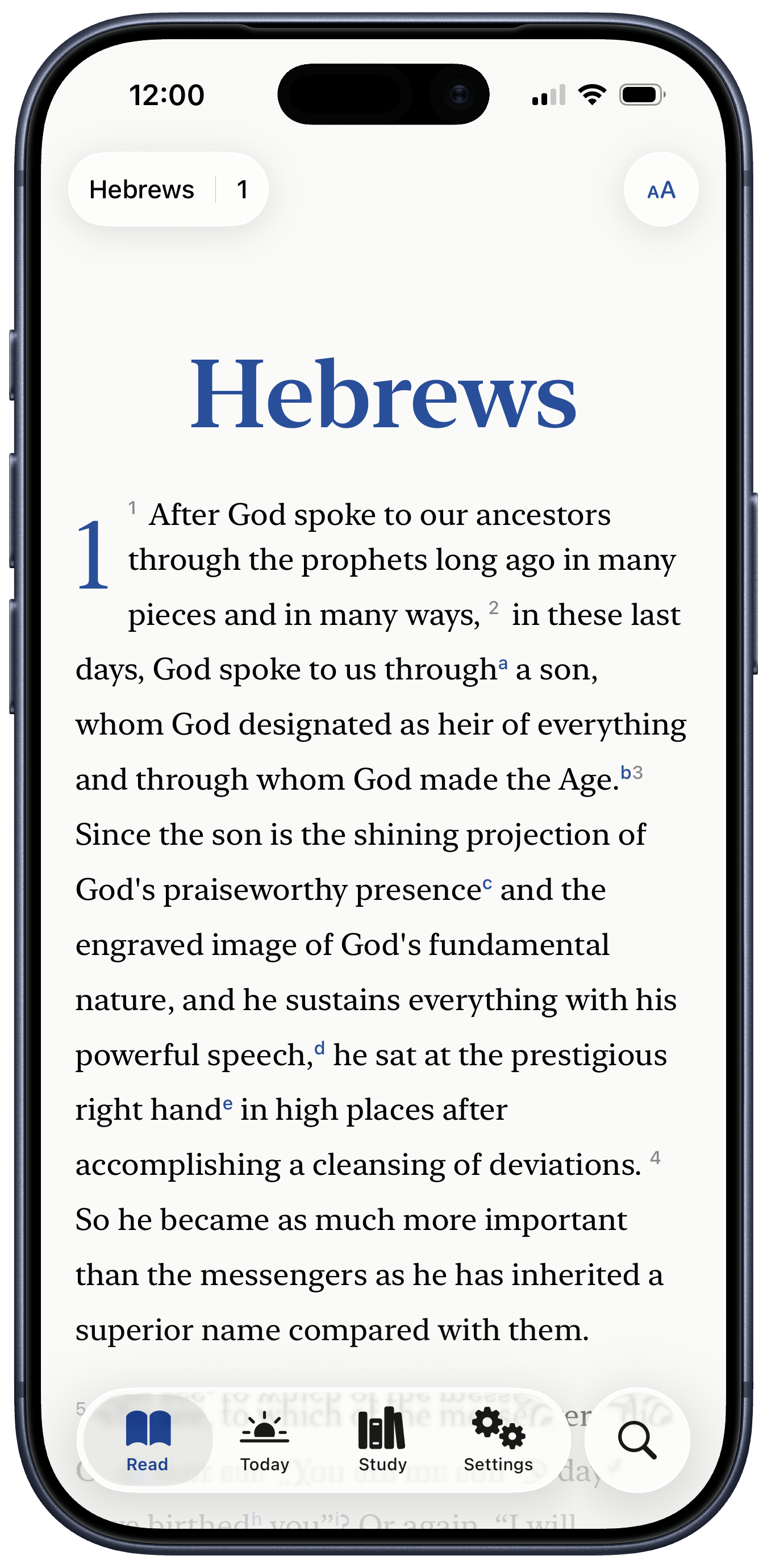
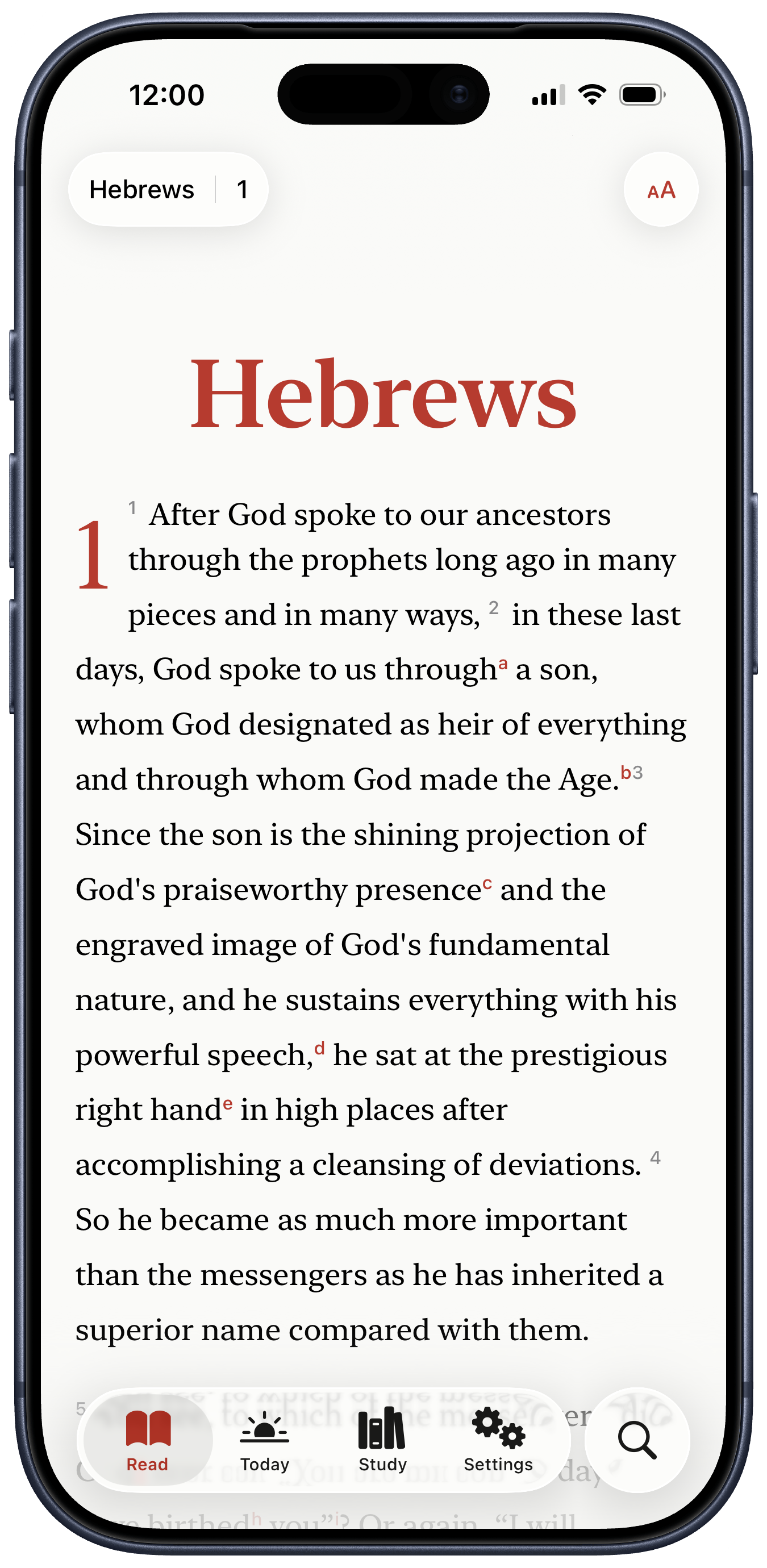
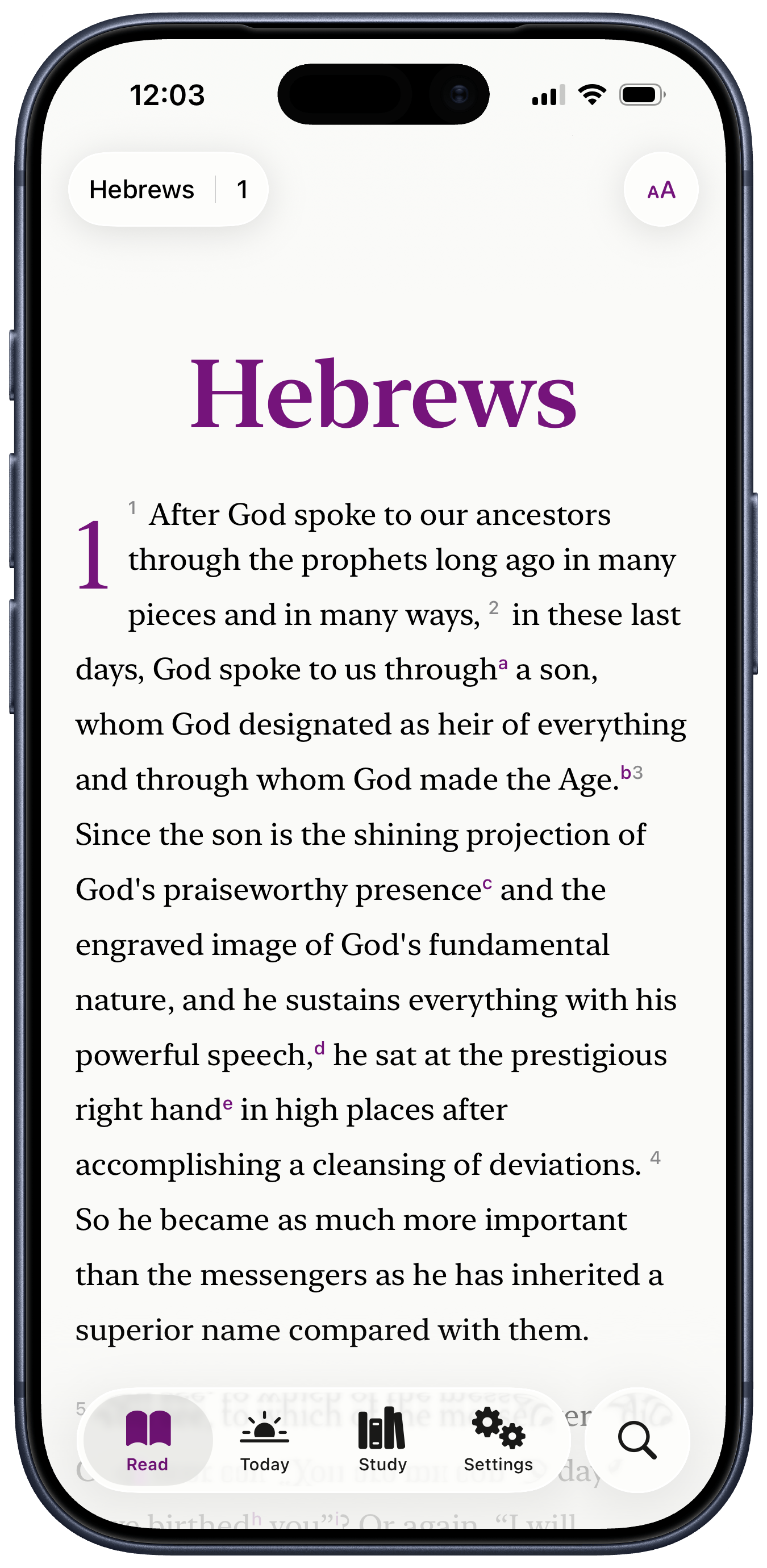
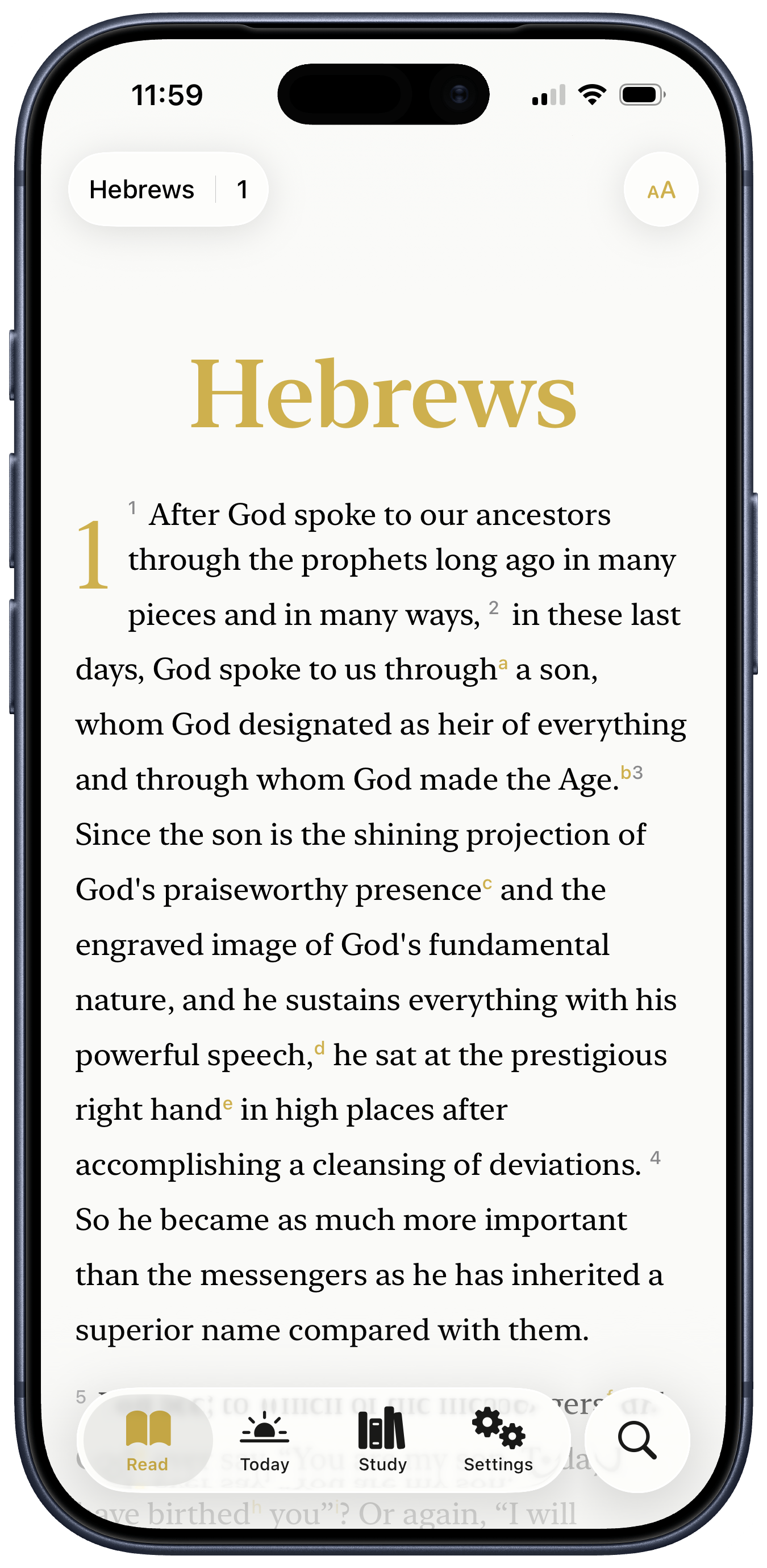
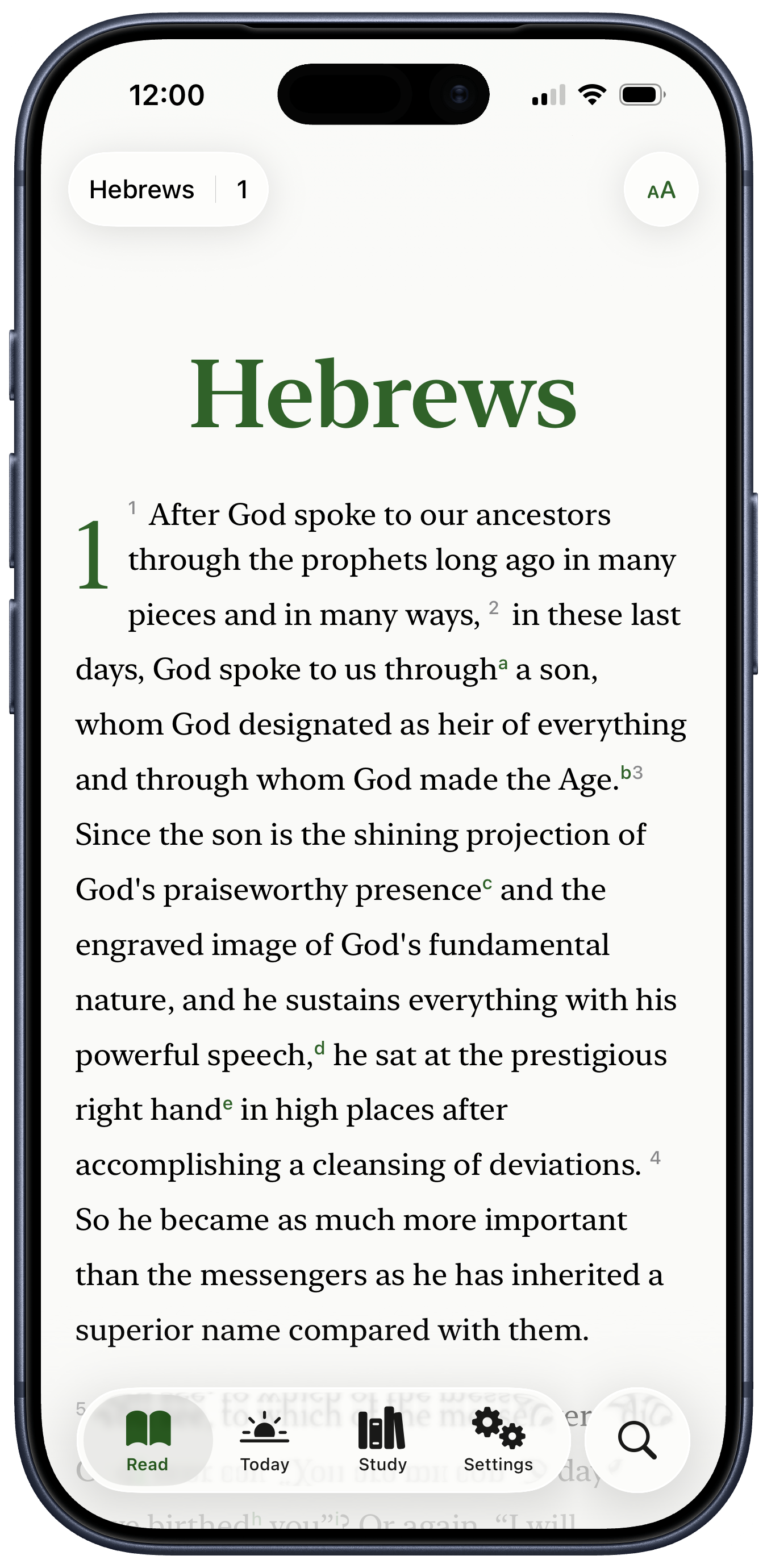
LIT Bible quietly honors the church year by adorning your reading with the liturgical season's colors — royal blue through Advent, red for the twelve days of Christmas, purple in Lent, gold for Easter, and forest green through Ordinary Time. Or choose from one of our hand-picked alternatives.

LIT Bible showing Hebrews 1 with Advent accent color
LIT Bible showing Hebrews 1 with Christmas accent color
LIT Bible showing Hebrews 1 with Lent accent color
LIT Bible showing Hebrews 1 with Easter accent color
LIT Bible showing Hebrews 1 with Ordinary Time accent color

Join the beta.

Open beta on both platforms. A couple of clicks of setup — and then it's just an app.

LIT Bible on iPhone — Matthew 5, the Beatitudes, with display options panel

iOS · TestFlight

  1. Tap Join the iOS beta. The link opens TestFlight.
  2. If you don't have TestFlight yet, the link will prompt you to install it first — it's Apple's official beta-testing app.
  3. Tap Accept, then Install. LIT Bible appears on your home screen with a small TestFlight dot next to its name. The dot goes away at launch.
Join the iOS beta →

Android · Firebase App Distribution

  1. Tap Join the Android beta. You'll land on a Firebase invitation page.
  2. Sign in with the Google account you want the app on, accept the invitation, and install Google's App Tester if you don't have it. (One-time step.)
  3. Tap Install for LIT Bible. Android may ask you to allow installation from this source — it walks you through it.
Join the Android beta →

Why this translation exists.

Faithful to the Greek.

Most English New Testaments inherit the same translation tradition — the same word-choices, the same in-group vocabulary, the same compromises with whoever was paying. LIT reads the Greek again. Logos doesn’t have to be “the Word.” Sarx doesn’t have to underwrite contempt for bodies. Faithful, in the older sense — careful with what’s actually there.

Trauma-informed.

Translation has caused harm. LIT chooses wording that minimizes harm without sidestepping meaning — and it’s honest when it can’t have both.

Reading with the oppressed.

Every translation puts someone in the front row. LIT puts the people the text was written to — the harmed, the doubting, the marginalized — and translates from that vantage. As a method, not a slogan.

Justice as the throughline.

The New Testament has been used to bless almost every injustice the Church has touched. LIT doesn’t pretend that’s an accident of bad readers. It translates with the throughline in view: a text about a person executed for siding with the wrong people, and the movement that grew from refusing to forget it.

Read the full Translation Commitments →